
The Rhythm of the Craft: An Inside Look at Hand Block Printing
Ever wondered about the hands that create the mesmerizing patterns on your favorite printed fabrics? Hand block printing, an ancient art form, is more than just a technique; it’s a way of life, steeped in tradition and skill. Join us as we step into the world of a dedicated artisan and experience a typical day in their vibrant workshop in Place.
Sunrise and Preparation
The day for the featured artisan begins before the sun fully crests the horizon. While the world sleeps, the workshop is already stirring with quiet activity.
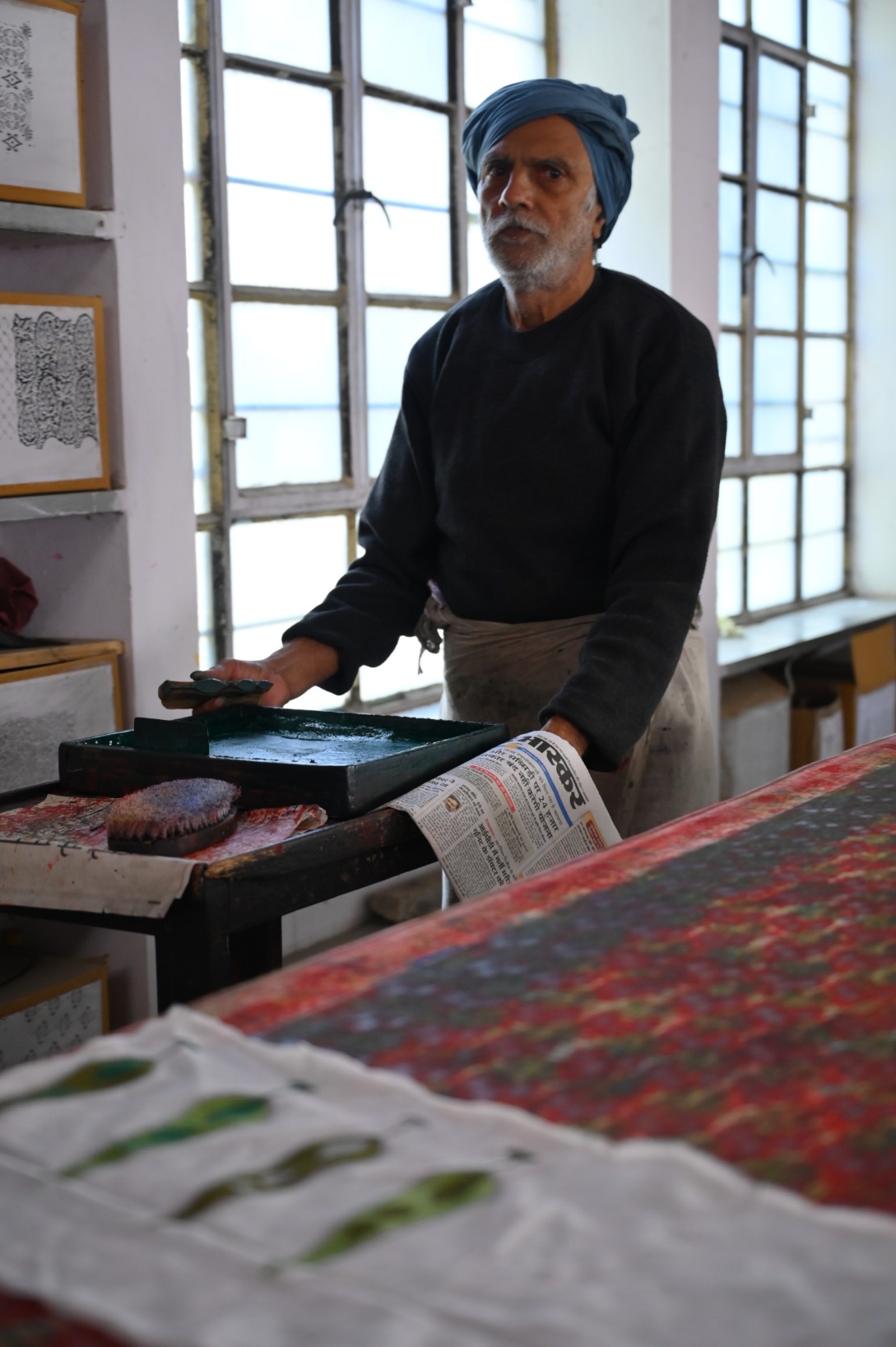
The very first task is preparing the saj (the printing table). A thick padding of felt and a jute cloth are laid out with absolute precision. This foundation is crucial; it provides the necessary cushion to ensure the block presses evenly onto the fabric. Even a slight imperfection can spoil the print.
Next comes the dye. The preparation of natural dyes is an art in itself. The artisan uses time-honored recipes, often involving materials like indigo, turmeric, and madder root. Mixing the perfect shade and consistency takes years of practice. “The color must speak to the fabric,” the artisan often says, as they carefully measure powders and liquids. “It is the soul of the pattern.”
The Main Event: The Printing Process
As the morning light streams into the workshop, the rhythmic thump, thump of the block begins. This sound is the heartbeat of the craft.
The process involves several critical steps:
- Laying the Fabric: The pre-washed fabric, often cotton or silk, is stretched taut and pinned securely onto the saj.
- Dye Tray Preparation: Dye is spread onto a screen tray, which is then tapped with the printing block. This ensures an even coating of color.
- The Impression: The artisan carefully aligns the block on the fabric. Using a precise, controlled motion, they strike the back of the block with a wooden mallet, or simply press down with strong, even pressure. This is where the magic happens, transferring the intricate design.
The true challenge lies in the repetition and alignment. Each impression must perfectly align with the last, creating a seamless, continuous pattern across meters of fabric. This requires immense concentration and an intimate knowledge of the block’s design—a skill passed down through generations.
| Time Block | Activity | Focus |
| 9:00 AM – 1:00 PM | Initial Printing Run | Main design application and alignment |
| 1:00 PM – 2:00 PM | Lunch and Dye Restocking | Preparing next set of colors |
| 2:00 PM – 5:30 PM | Detail Work and Finishing | Applying borders, second colors, or khadi (filler) blocks |
Afternoon: Details and Drying
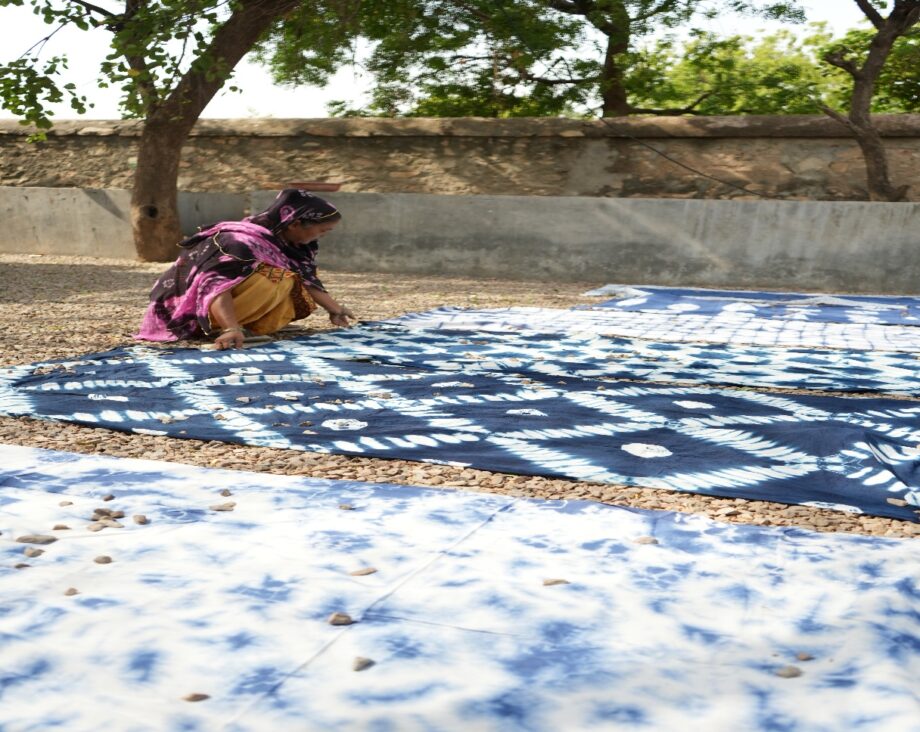
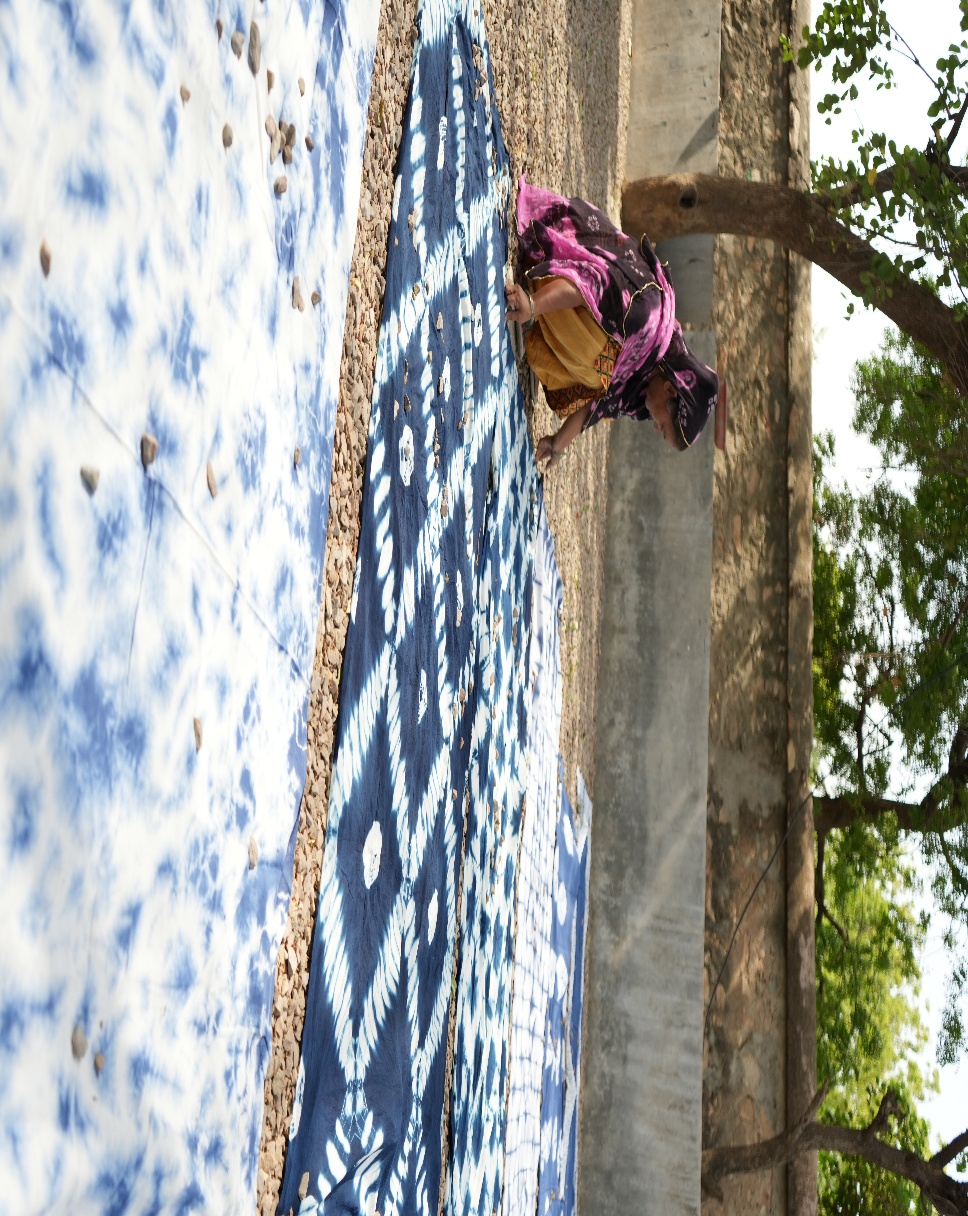
The afternoon is reserved for applying secondary colors or intricate border designs, a process known as double printing. This requires a new set of blocks and even more delicate handling. Some complex designs can involve up to five or six different blocks. Once the printing is complete, the fabric must dry. The printed cloth is carefully hung to dry in the sun or a well-ventilated area outside the workshop. This step is crucial for the dye to set properly and for the fabric to reach its final, brilliant hue.
End of Day: Clean-Up and Planning
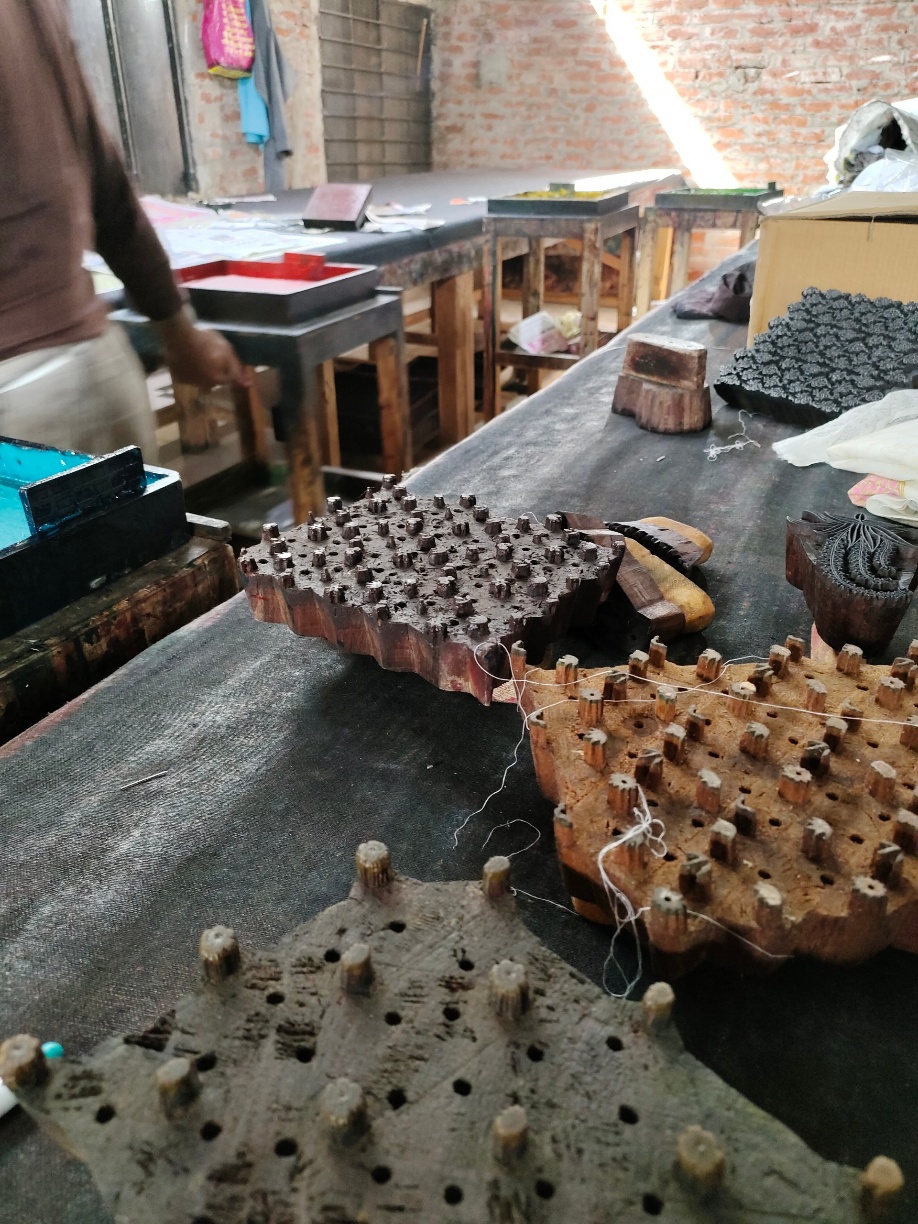
As the day winds down, there is still work to be done. The delicate wooden blocks must be meticulously cleaned and maintained. If any dye is left to dry on the carving, the block could be ruined. Each block is a piece of art itself, sometimes taking a master carver weeks to create.
The artisan spends the final hour planning the next day’s work—selecting fabrics, discussing designs with assistants, and preparing the initial base colors. The rhythm of the artisan’s day is a testament to sustainable and slow fashion. It’s a life governed by the elements, the chemistry of the dyes, and the unwavering discipline of the hand.
The Legacy of the Block
The work of a hand block printing artisan is a bridge between the past and the present. Every garment created carries the story of their day, their precision, and their passion. When you choose a hand block printed item, you are not just buying a product; you are supporting a tradition and a lifestyle.